
By Christion Billy

Photo Credit: Melissa Milios Davis (getty images)
On Oct. 23, Ward 4 Council member Janeese Lewis George and Ward 1 Council member Brianne Nadeau proposed the Local News Funding Act to legislation.
The Local News Funding Act will set aside 0.1% of government funding for Local News outlets to help them stay in business. Some local news outlets that will receive funding include the Washington Informer, Washingtonian, and DCist.
“Strong journalism is indispensable for a healthy democracy and an accountable government, but local news is being shuttered by layoffs. This bill would create a stable funding source for local reporting so it can continue to inform residents, uncover corruption and abuse, highlight injustices and inequalities, and hold our government accountable to its people,” said Ward 4 council member, Janeese Lewis George.
The residents will decide which local news outlets receive funding. Each registered voter will get a news coupon that they can use to support the news outlets that interest them the most, and the number of news coupons that a news outlet accumulates will determine their funding.
“We need to support our independent news outlets, particularly our African-American, so to the extent that we’re dedicating tax dollars and resources to support that was a place where a lot of young journalists come out this is D.C. so we need to promote alternative voices,” said Howard alumni and attorney, Dean Hunter.

Photo Credit: Douglas Sacha/Getty Images
The legislation will implement safeguards to ensure and prevent abuse of the new bill. Some requirements for news outlets to receive funding include reporting news as the main activity, making local news free of charge, and separating local news from advertising.
A new seven-member community Journalism board will monitor the Local News Funding Act. This board will also serve as an independent in the political system.
Disappearance of Newspapers
Newspapers are disappearing at a high rate. In 2005, newspaper revenue reduced from $50 to $20 billion. Some communities are losing their news source, causing them not to have access to it digitally.
“Even though the pandemic was not the catastrophic ‘extinction-level event’ some feared, the country lost more than 360 newspapers between the waning pre-pandemic months of late 2019 and the end of May 2022,” according to Northwestern University’s 2022 report on the State of Local News.
The surviving local news outlets have had to fire reporters and reduce some coverage. The decrease in news coverage has affected the news outlets’ beats, such as crime.
However, some counties are served by one local news outlet. The loss of local news can decrease voter turnout, public participation, and broadcasting.
The weekly newspapers are what keep communities united. Communities have become more isolated since the decline of local news.
“The counselor lives in D.C.; she grew up in D.C. reading local news. And one of the things that we’ve seen a lot more recently, especially in the digital age, is that a lot of local news outlets are either continuing or reducing their circulation, letting reporters go,” said Alexandros Taliadoros, a spokesman for council member George.
However, residents are looking forward to reviving local news. Resident’s participation is not a significant part of political bills, which has caused many of them to feel as if their voice is not heard, reducing voter turnout and participation.
“I’m here for it. I mean, it’s able to support small news companies. It gives the opportunity, especially to D.C. residents, you know, to support those people and to support their favorite news outlets that they do like to, you know, tune into,” said Howard University student and D.C. resident, Kyndal Samuel.
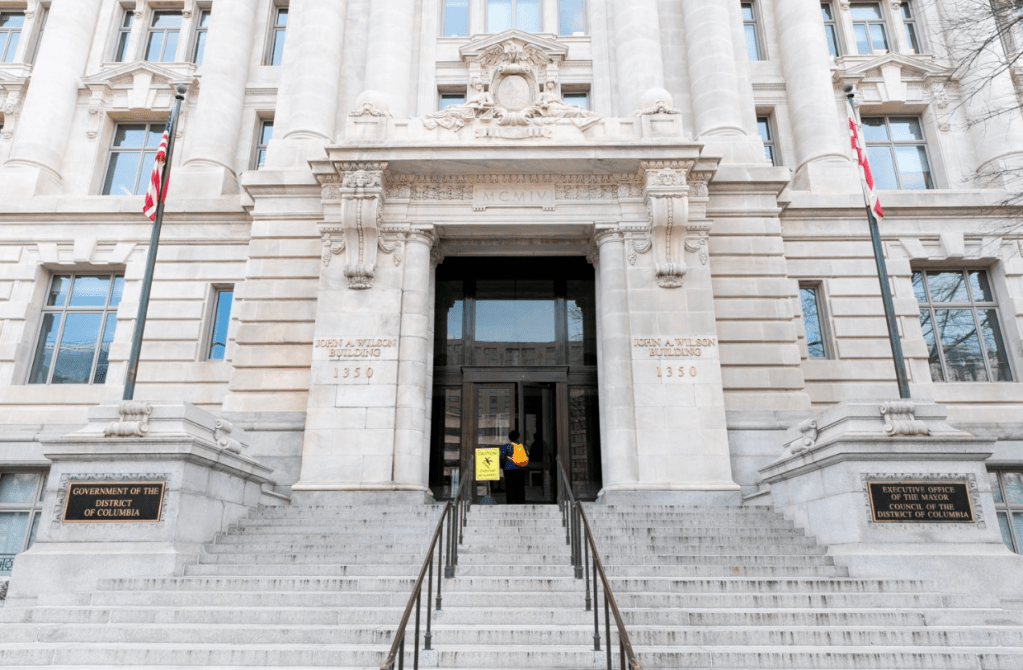
Photo Credit: Suzannah Hoozer
The future of the Local News Funding Act rests in the hands of D.C. residents. The public hearing is coming up, allowing residents to voice their concerns on the bill.
“Introducing the bill is always the first step in the process. The next thing that will happen is that it will have a hearing at some point. It hasn’t been settled yet,” said Alexandros Taliadoros, a spokesman for council member George.
“But there’ll be a hearing, and there’ll be an opportunity where committee members, experts, stakeholders, anyone who wants to come and speak on the bill and come speak on the bill. And then we’re going to have all that feedback incorporated and be able to make changes to the bill based on that, and then hopefully get it passed, and then hopefully get it funded.”

 Christion Billy
One thought on “How will the Local News Funding Act benefit local news outlets?”